 Lifesciences


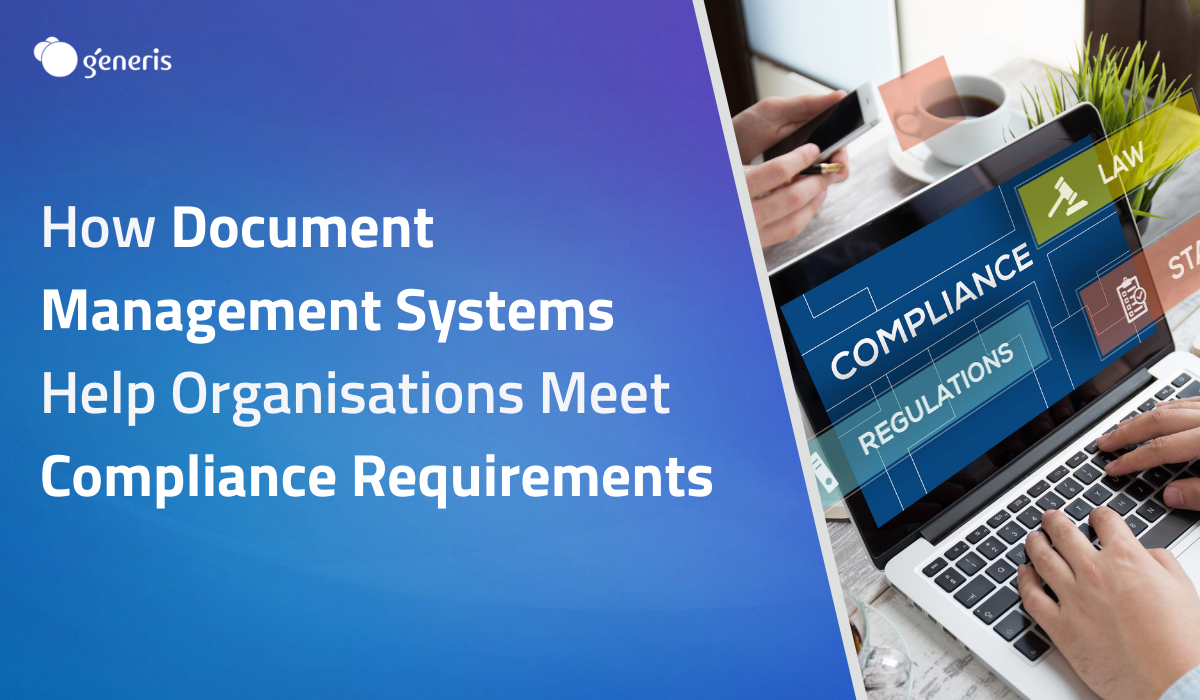
Document management systems are often positioned as productivity tools, but in regulated environments, their role is much broader. The way documents are secured, controlled, and traced has a direct impact on an organisation’s ability to meet compliance obligations.
Below are some of the most common questions organisations ask when exploring how document management supports compliance.
Why does document security matter for compliance?
In regulated industries, protecting information is a foundational requirement. Sensitive documents must be shielded from unauthorised access, accidental loss, or improper modification.
A document management system supports this by providing secure storage, authentication, and controls that help ensure information is handled appropriately. A strong DMS for regulated industries must include:
- Granular role-based permissions
- Comprehensive audit trails and activity reporting
- Encryption at rest and in transit
- Strong access controls like MFA and SSO
- Controls to prevent unauthorised modification of documents
- Configurable retention and disposition rules
Security is not just about preventing breaches, but about demonstrating that safeguards are in place and consistently applied.
How can document access be managed in a compliant way?
Many compliance frameworks require organisations to control who can access, edit, or approve documents.
Document management systems make this possible by allowing access rules to be defined based on roles or responsibilities. Permissions can evolve as teams change, helping organisations avoid both excessive access and unnecessary restrictions.
Managing access within the system reduces reliance on manual controls and makes compliance easier to sustain.
What are audit trails and how important are they?
Compliance often depends on being able to show how and when a document was created, reviewed, changed, and approved.
A compliance-driven document management system records these activities automatically, creating an audit trail: a traceable history of actions. This removes the need to reconstruct events during audits and provides confidence that document handling can be explained when required.
What role does version control play in regulated environments?
Clear version control is essential where documents are frequently updated but must remain accurate and approved.
Without proper controls, teams may struggle to identify which version is current or approved. Document management systems address this by tracking versions automatically and preserving historical records.
This helps prevent errors and ensures that the correct information is used at the right time.
Can document management systems support compliance-related processes?
Compliance is often enforced through process, not just policy.
Document management systems can make this much easier by embedding review, approval, and change workflows directly into document handling. This helps ensure consistency, highlights deviations, and creates a record of how decisions were made.
By formalising and standardising these processes, organisations reduce reliance on informal practices.
Do organisations need an industry-specific DMS?
Regulatory requirements vary significantly between industries, which often leads organisations to ask whether they need a document management system built specifically for their sector.
In practice, most compliance obligations share common foundations. These include secure access, traceability, version control, auditability, and records retention. A well-designed DMS can support these requirements across industries, while allowing processes and controls to be tailored where needed.
For example, document management systems are commonly used to support compliance with:
- HIPAA in healthcare, where access control and audit trails are critical
- FINRA and SEC rules in financial services, which require strict oversight of records and approvals
- ISO standards in manufacturing and engineering, where controlled documentation and change management are essential
- GDPR in Europe, which places strong requirements on data protection, access, and retention
Rather than enforcing one rigid model, effective systems provide a governed foundation that embeds compliance into everyday processes, making it harder for users to work outside required controls. This reduces the need for multiple tools and helps organisations manage compliance consistently across teams and regions.
A practical approach to compliance and document management
A document management system does not make an organisation compliant on its own. Compliance remains an organisational responsibility, shaped by regulation, process, and culture.
However, when systems are designed with compliance in mind, they make it far easier to implement, maintain, and demonstrate compliant ways of working — even as regulatory pressure increases.
This is the thinking behind a compliance-first approach to enterprise content and data management, where governance, traceability, and control are treated as foundations rather than afterthoughts.
You can explore this approach in more detail in our long-form guide:
The Compliance-First Approach to Enterprise Content and Data Management for Regulated Industries
A deep dive into why general-purpose platforms fall short under regulatory pressure, and what changes when content and data management are designed with compliance as a foundation.
Read the blog